
Your teeth do more than create your smile. The way your upper and lower teeth come together influences how you chew, speak and move your jaw. When teeth are crowded, rotated, excessively spaced or the bite is not properly balanced, the jaw muscles and temporomandibular joints (TMJs) may have to adapt to the way the teeth meet.
This is why teeth alignment and jaw joint health are often considered together during a comprehensive dental and orthodontic evaluation.
At Maeoris Dental Clinic, the best dental clinic in Madurai and Dindigul, advanced digital dentistry allows our dental team to assess tooth alignment, bite relationships and jaw joint health function as part of a personalised treatment plan.
What Is the TMJ?
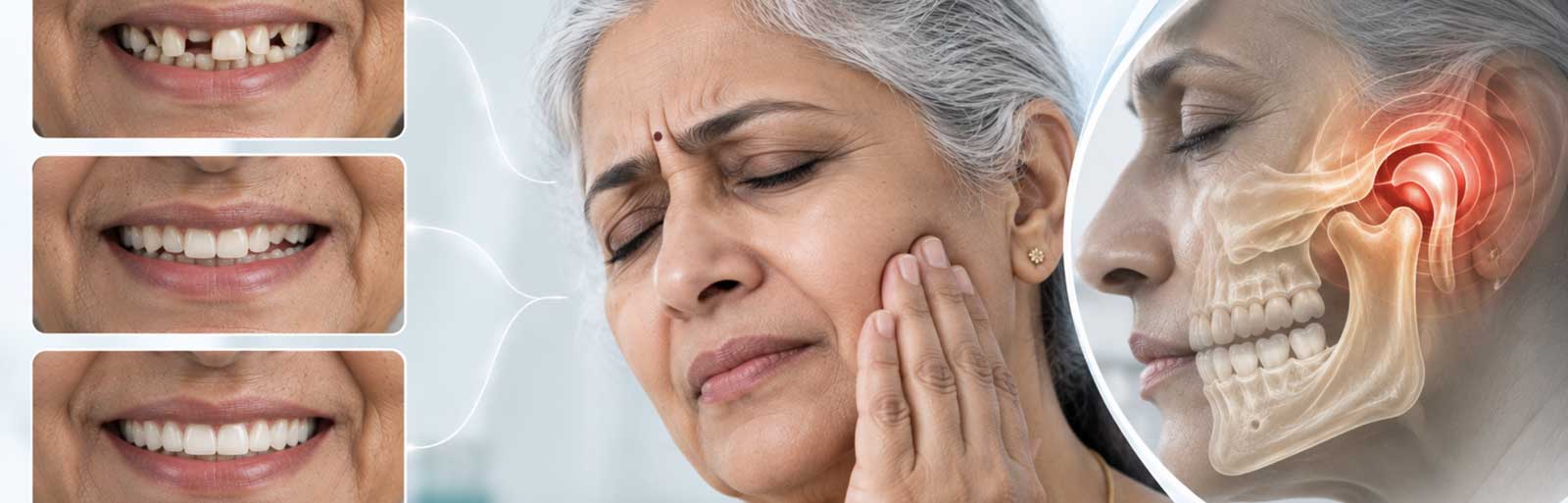
The temporomandibular joint (TMJ) is the joint that connects your lower jawbone to your skull. You have one joint on each side of your face, located just in front of your ears.
The TMJs allow your jaw to perform movements needed for everyday activities such as:
- Opening and closing your mouth
- Chewing food
- Speaking
- Yawning
- Moving your jaw from side to side
These movements involve not only the joint itself but also several muscles, ligaments and other supporting structures.
When these structures become irritated, overloaded or dysfunctional, a person may experience symptoms commonly referred to as temporomandibular disorders (TMD).
What Does Teeth Alignment Have to Do With the TMJ?
Your teeth, jaw muscles and TMJs work together as part of the same chewing system.
Ideally, your teeth should come together in a way that allows the jaw to function comfortably and efficiently. However, certain types of malocclusion, meaning an improper relationship between the upper and lower teeth can affect how the jaw moves.
For example, crowded teeth, crossbite, deep bite, open bite or significant discrepancies in the way the teeth meet may influence chewing patterns and muscle activity.
However, it is important to understand that malocclusion alone does not necessarily cause TMJ problems. TMD can have several contributing factors, including stress, teeth grinding or clenching, trauma, muscle tension and joint-related conditions.
5 Ways Poor Tooth Alignment May Affect Jaw Function
1. It Can Change the Way Your Teeth Come Together
When teeth are not properly aligned, the upper and lower teeth may contact each other unevenly.
The jaw may naturally adjust its position or movement to find a comfortable bite. In some individuals, this can contribute to increased strain on the muscles involved in chewing.
A detailed bite assessment can help determine whether the way your teeth meet is affecting normal jaw function.
2. It May Influence Chewing Patterns
When teeth are crowded or the bite is significantly altered, chewing may not occur evenly on both sides.
Over time, favouring one side of the mouth may place different demands on the muscles and joints on either side of the jaw.
This does not mean that every person with misaligned teeth will develop TMJ symptoms, but identifying unusual chewing patterns can be an important part of a comprehensive dental evaluation.
3. It Can Be Associated With Jaw Muscle Tension
Your jaw muscles continuously work when you chew and speak.
If the bite is uncomfortable or the muscles are compensating for an irregular tooth relationship, some people may experience muscle fatigue or tension.
Jaw muscle discomfort can sometimes be felt around the cheeks, temples or near the ears and may be more noticeable after prolonged chewing.
4. Teeth Grinding Can Add Further Stress
Bruxism, or teeth grinding and clenching, can place considerable forces on the teeth, muscles and TMJs.
When bruxism occurs alongside an existing bite problem, the combined forces may contribute to tooth wear, muscle discomfort or jaw symptoms in some individuals.
If you frequently wake up with jaw tightness, headaches or sensitive teeth, it is worth discussing these symptoms with a dentist.
5. It May Affect Long-Term Dental and Jaw Function
Orthodontic treatment is not simply about creating straighter teeth.
When appropriately planned, orthodontic treatment can improve the relationship between the teeth and establish a more functional bite. However, treatment goals should always be based on the individual patient’s dental, skeletal and functional characteristics—not solely on the appearance of the smile.
Signs That Your Jaw May Need Attention
Pay attention if you regularly experience:
- Clicking or popping sounds from the jaw
- Difficulty or discomfort when opening your mouth
- Jaw stiffness
- Pain while chewing
- Facial or jaw muscle soreness
- Frequent headaches around the temples
- Ear-area discomfort without an obvious ear problem
- A feeling that your bite has suddenly changed
- Difficulty opening your mouth fully
- Jaw locking
Occasional clicking without pain or restricted movement is relatively common and does not automatically indicate a serious TMJ disorder. However, persistent pain, locking or difficulty moving the jaw should be professionally evaluated.
Can Braces or Aligners Improve TMJ Health?
Orthodontic treatment can correct certain types of tooth and bite problems, but it should not be presented as a universal treatment for TMJ disorders.
Braces and clear aligners can move teeth into planned positions and improve certain malocclusions. Whether orthodontic treatment is appropriate for someone experiencing TMJ symptoms depends on the underlying cause.
Depending on the diagnosis, TMJ management may involve:
- Behavioural and lifestyle modifications
- Managing teeth clenching or grinding
- Physiotherapy or jaw exercises
- Pain management
- Bite or orthodontic treatment in selected cases
- Management of other underlying dental or joint conditions
A proper diagnosis should come before deciding whether orthodontic treatment is appropriate.
Why Digital Dentistry Can Help With Bite and Alignment Planning
Modern orthodontics has moved beyond simply looking at teeth from the outside.
Digital technologies can help dentists and orthodontists evaluate tooth positions, bite relationships and treatment progress with greater visualisation and planning accuracy.
At Maeoris Dental Clinic, the best dental clinic in Madurai and Dindigul, digital dentistry is integrated into treatment planning to help create a more comprehensive understanding of each patient’s dental condition. Depending on the treatment, digital scans, imaging and other diagnostic records can be used to plan tooth movement and evaluate the relationship between different structures.
This approach supports precision-driven, personalised orthodontic treatment rather than relying on a one-size-fits-all approach.
Does Everyone With Crooked Teeth Need Orthodontic Treatment?
No.
Not every person with crowded or misaligned teeth will develop TMJ problems, and not every person with TMJ symptoms has an alignment problem.
The decision to undergo orthodontic treatment should consider:
- Severity and type of malocclusion
- Tooth and jaw position
- Oral health
- Functional concerns
- Existing TMJ symptoms
- Facial and skeletal characteristics
- Long-term treatment goals
A professional assessment can help determine whether treatment is necessary and which approach is appropriate.
When Should You See a Dentist or Orthodontist?
Consider scheduling an evaluation if you have crooked or crowded teeth along with jaw pain, clicking, locking, difficulty chewing or frequent jaw tension.
Early assessment can help identify whether your symptoms are related to tooth alignment, muscle activity, bruxism, the TMJ itself or another dental condition.
The goal should not simply be to make the teeth look straighter. A comprehensive treatment plan considers aesthetics, function, stability and overall oral health.
Teeth Alignment and TMJ Health: The Bottom Line
Teeth alignment, bite and jaw function are closely connected parts of the oral system. Certain bite problems may influence how the jaw muscles and TMJs function, but TMJ disorders have multiple possible causes and cannot always be attributed to crooked teeth.
If you are concerned about your bite, jaw pain or tooth alignment, a comprehensive dental and orthodontic assessment can help identify the underlying issue and determine whether treatment is required.
Looking for the best dental clinic in Madurai or the best dental clinic in Dindigul for advanced orthodontic and digital dental care? Maeoris Dental combines clinical expertise with advanced digital technology to plan personalized treatment based on each patient’s needs.