For Appointments:

Dindigul: +91 98421 02384
Madurai: +91 73737 36096

Connect With Us:

iTero Lumina Pro at Maeoris: A Smarter Way to Scan, Plan and Visualise Your Smile

Dentistry is becoming increasingly digital, changing not only how treatments are performed but also how patients understand and experience their dental care.

At Maeoris Dental Clinic, digital technology has been an integral part of our clinical approach for years. One of the latest additions to this technology-driven workflow is the iTero Lumina Pro intraoral scanner, designed to create detailed 3D digital records of the teeth and oral structures.

From replacing conventional dental impressions in many treatments to supporting orthodontic planning and progress monitoring, iTero Lumina Pro helps make the journey from diagnosis to treatment more comfortable, visual and precise.

What Is the iTero Lumina Pro?

iTero Lumina Pro is an advanced intraoral scanner that digitally captures the teeth and surrounding oral structures.

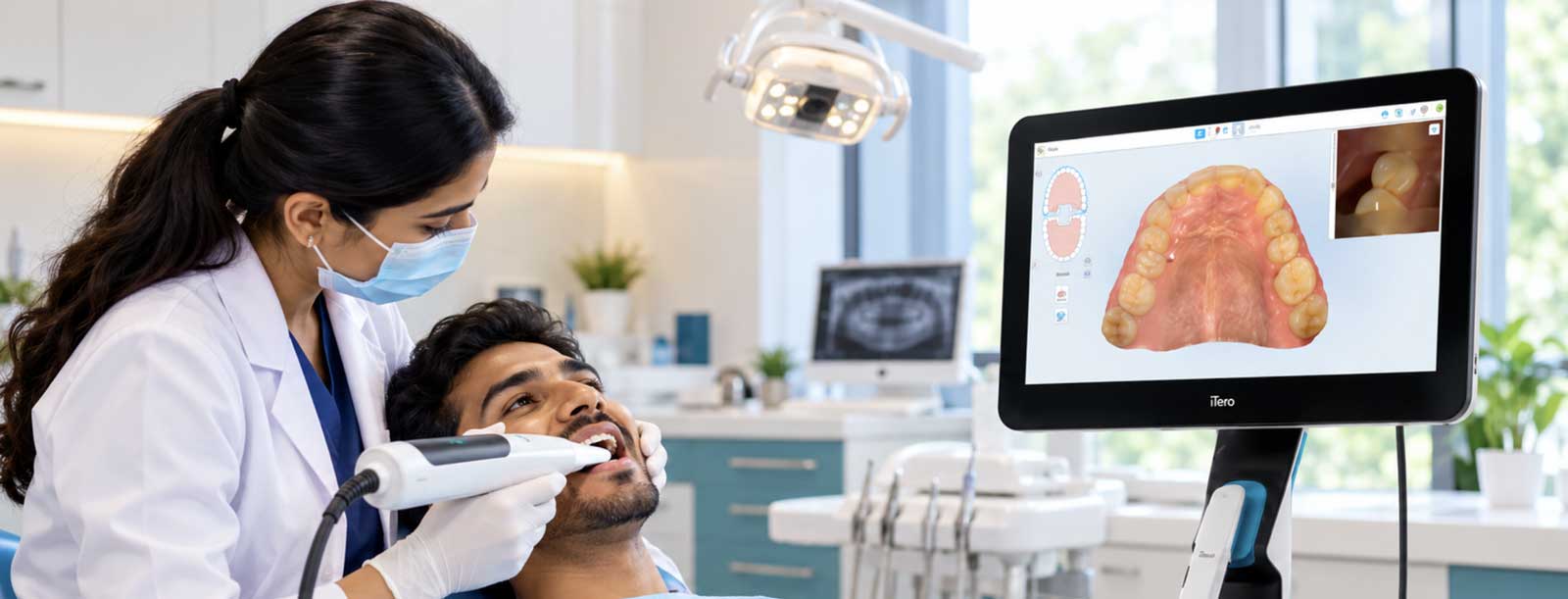
Instead of relying solely on conventional impression materials, the dentist moves a compact scanning wand around the patient’s mouth. As the scan progresses, a detailed 3D digital model is generated on the screen.

The system also integrates high-definition intraoral imaging and near-infrared imaging (NIRI) within the same scanning platform, giving the clinical team additional information during evaluation.

For patients, this means dentistry becomes much more visual. Instead of simply being told what is happening inside their mouth, they can see their teeth digitally and better understand the treatment being discussed.

Moving Beyond Conventional Dental Impressions

For many patients, one of the least comfortable parts of dental or orthodontic treatment has traditionally been taking impressions.

Conventional impressions involve placing impression material inside a tray and holding it in the mouth until it sets. While these impressions have been widely used in dentistry, some patients—particularly children and people with a sensitive gag reflex—may find the experience uncomfortable.

With digital intraoral scanning, a detailed record can instead be captured directly using the scanner.

The iTero Lumina Pro uses Multi-Direct Capture technology, which provides a wider field of view and supports faster scanning with a smaller wand compared with previous-generation iTero scanners.

This can be particularly useful when capturing areas such as deep palates, partially erupted teeth and smaller mouths.

A Detailed 3D View for Better Treatment Planning

Digital scanning is not simply about replacing an impression tray.

The 3D model provides the dentist with a detailed digital representation that can be viewed from different angles, enlarged and evaluated during treatment planning.

This helps create a more structured digital workflow where the clinical team can evaluate tooth position and other relevant oral structures before deciding on the appropriate treatment approach.

At Maeoris, technology is used to support clinical judgement—not replace it. The goal is to give our dentists better information to work with while making the treatment process easier for patients to understand.

Making Orthodontic Treatment More Visual

One of the major applications of iTero Lumina Pro is in digital orthodontics.

When a patient visits Maeoris for teeth alignment, the digital scan provides an accurate starting record of the position of their teeth. This information can then support orthodontic assessment and treatment planning.

Depending on the treatment being considered, digital simulation tools can also help patients visualise a projected treatment outcome.

This changes the consultation experience.

Rather than trying to imagine how aligned teeth could look, patients may be able to view a digital simulation and discuss the treatment possibilities directly with their dentist or orthodontist.

It makes treatment planning more interactive and can help patients make better-informed decisions about their smile. This is also integrated with crown designing software that it enables to design the crown in minutes.

Tracking How Your Smile Changes

Orthodontic treatment happens gradually.

Having digital records from different stages of treatment allows the clinical team to compare scans over time. Tools such as TimeLapse and Invisalign Progress Assessment can support the monitoring of tooth movement between visits.

For the patient, these comparisons can also make progress easier to appreciate.

Small changes may not always be obvious when you look at your smile every day. Comparing digital records from different stages can provide a clearer picture of how the teeth have moved throughout treatment.

More Than a 3D Scanner

Another important feature of the iTero Lumina Pro is that the scanning wand incorporates NIRI (near-infrared imaging) and an HD intraoral camera.

NIRI can support screening for interproximal caries decay occurring between teeth as part of the clinical evaluation.

However, it is important to understand that NIRI is an adjunct to radiographic caries diagnosis and does not replace dental X-rays when radiographs are clinically required.

By bringing different imaging capabilities into the digital workflow, the technology provides the dentist with additional information while assessing the patient’s oral health.

Why Digital Dentistry Matters at Maeoris

Advanced equipment alone does not create better dentistry. What matters is how technology is integrated into diagnosis, planning and treatment.

Maeoris’ journey in digital dentistry began years before today’s intraoral scanning systems. Over time, the practice has incorporated technologies including CBCT imaging, CAD-CAM prosthetics, digital impressions, same-day dentistry, dynamic navigation for implant surgery, in-house milling and implant photogrammetry.

The iTero Lumina Pro continues this evolution, particularly within digital records and orthodontic workflows.

Each technology has a specific purpose: to give the clinical team better information, greater control over treatment planning and a more predictable digital workflow while improving the patient’s overall experience.

Technology That Helps Us Plan Better. Care That Remains Personal.

For patients, advanced dental technology should ultimately translate into something simple: a better treatment experience.

With the iTero Lumina Pro, patients at Maeoris can experience comfortable digital scanning, detailed 3D records, visual treatment planning and digital progress monitoring—all while remaining actively involved in understanding their treatment.

Because at Maeoris, technology isn’t introduced simply because it’s new.

We use technology when it helps us see better, plan more precisely and provide better, more comfortable dental care.

If you are considering teeth alignment, orthodontic treatment or digital dental care in Madurai or Dindigul, visit Maeoris Dental to understand how our digital approach can support your treatment journey.

Maeoris Dental Clinic– Advanced Digital Dentistry in Madurai and Dindigul. Book an appointment today.
Traditional Dentistry vs Digital Dentistry: What’s the Difference?

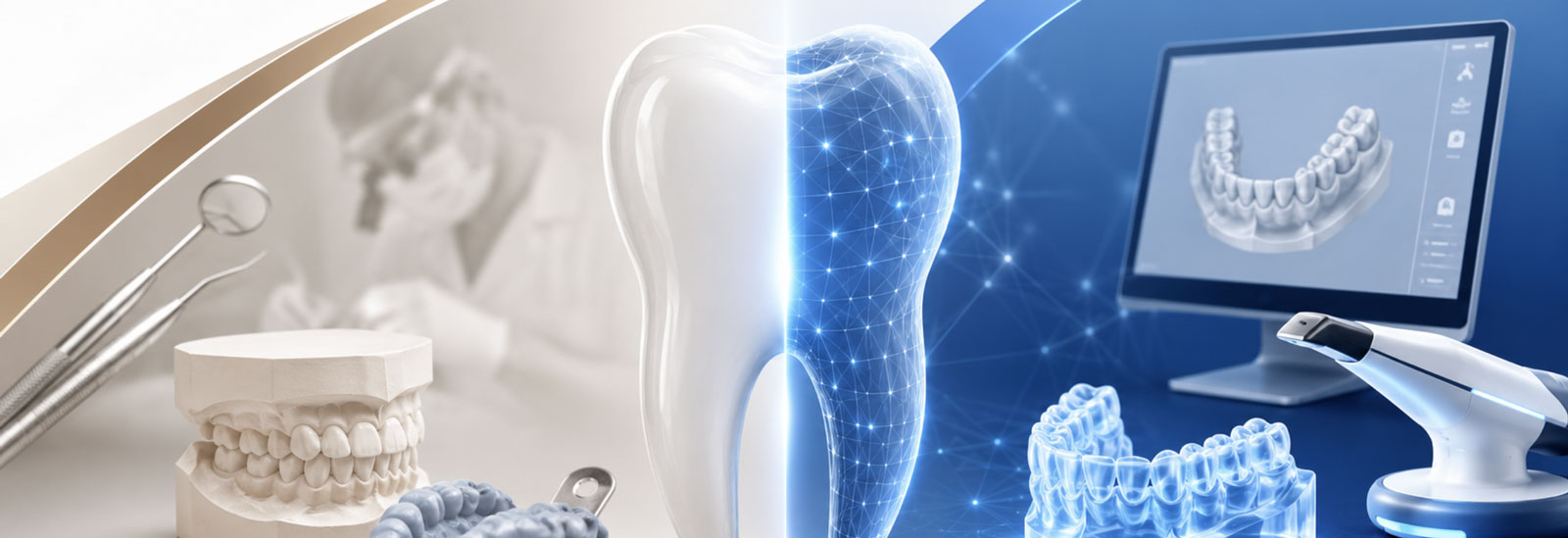
Dentistry has changed significantly over the years. While traditional dental techniques continue to play an important role in patient care, advances in technology have introduced digital dentistry, making diagnosis, treatment planning and restoration more precise and efficient.

From digital impressions and 3D imaging to CAD/CAM restorations and computer-guided implant procedures, digital dentistry workflows are changing how many dental treatments are planned and delivered.

But what exactly is the difference between traditional dentistry and digital dentistry? And does digital always mean better when it comes to dental care?

Let’s understand.

What Is Traditional Dentistry?

Traditional dentistry relies on established clinical techniques and physical methods for diagnosis, impressions, treatment planning and fabrication of dental restorations.

Some commonly used conventional methods include:

  • Physical dental impressions using impression materials
  • Conventional X-rays
  • Physical plaster or stone dental models
  • Manual treatment planning
  • Laboratory-based fabrication of crowns, bridges and dentures
  • Conventional surgical planning

These methods have been successfully used for decades and remain appropriate for many dental procedures. The choice between traditional and digital techniques ultimately depends on the patient’s condition and the dentist’s clinical judgement.

What Is Digital Dentistry?

Digital dentistry uses advanced imaging, scanning, computer software and computer-controlled manufacturing to support different stages of dental treatment.

Depending on the treatment, digital dentistry may involve:

  • Intraoral scanners
  • Digital X-rays
  • CBCT 3D imaging
  • CAD/CAM technology
  • Digital smile planning
  • Computer-guided implant planning
  • 3D printing
  • Digital models and virtual treatment simulations

Digital dentistry is not a single treatment or procedure. It is a broader approach that can be integrated into diagnosis, treatment planning, restorative dentistry, orthodontics and implant dentistry. If you have visited the top dental clinic in Madurai and Dindigul, Maeoris Dental Clinic, you would have come across these advanced treatments.

Traditional Dentistry vs Digital Dentistry: Key Differences

Traditional DentistryDigital Dentistry
Physical impressionsDigital impressions using intraoral scanners
Conventional X-rays and 2D imagingDigital imaging and 3D CBCT when indicated
Physical dental modelsVirtual 3D dental models
Manual or conventional planningComputer-assisted treatment planning
Laboratory fabricationCAD/CAM-assisted design and manufacturing
Multiple manual stepsMore integrated digital workflows
Physical records and modelsDigitally stored patient records and scans
Conventional surgical planningComputer-guided or dynamic navigation options for selected implant procedures

1. Dental Impressions: Putty vs Digital Scanning

One of the most noticeable differences for patients is how dental impressions are taken.

Traditional impressions involve placing impression material inside a tray and asking the patient to bite down while the material sets.

Digital dentistry can use an intraoral scanner to capture a three-dimensional digital representation of the teeth and surrounding structures.

For many patients, digital scanning can be more comfortable and can allow the dentist to view the scan immediately. Digital impressions can also integrate directly with CAD/CAM workflows for designing restorations.

However, digital scanning is not automatically the best option for every clinical situation. The type of restoration, anatomy and treatment requirements influence which impression technique is appropriate.

2. 2D Imaging vs 3D Imaging

Traditional dental diagnosis often relies on conventional two-dimensional radiographs.

Digital dentistry can incorporate CBCT (Cone Beam Computed Tomography), which creates three-dimensional images of dental and maxillofacial structures.

This can be particularly valuable when detailed anatomical information is required, such as for:

  • Implant planning
  • Assessment of jawbone anatomy
  • Locating important anatomical structures
  • Complex oral surgery
  • Evaluation of impacted teeth

CBCT provides information that may not be visible on conventional 2D radiographs. However, it should be prescribed when clinically justified because it involves radiation exposure.

3. Manual Planning vs Digital Treatment Planning

In a traditional workflow, the dentist may rely primarily on physical models, radiographs and clinical examination to plan treatment.

With digital dentistry, information from different sources can be combined to create a more comprehensive digital representation of the patient’s anatomy.

For example, CBCT data, intraoral scans and facial scans can be integrated in appropriate cases to assist treatment planning.

This can be especially useful for complex treatments such as full-mouth rehabilitation and implant dentistry, where careful planning is essential.

4. Conventional Restorations vs CAD/CAM Dentistry

Traditionally, crowns, bridges and other restorations are designed and fabricated through conventional laboratory processes.

Digital workflows can use CAD/CAM (Computer-Aided Design and Computer-Aided Manufacturing) technology.

The digital workflow may involve:

Digital scan → Computer-aided design → Milling/3D manufacturing → Finishing → Delivery

This can reduce some manual steps and allow dental teams and laboratories to communicate using digital files.

In appropriately selected cases, CAD/CAM workflows can also support faster fabrication and, with suitable chairside systems, same-day restorative treatment.

5. Conventional Implant Planning vs Digital Implant Dentistry

Implant dentistry is one area where digital technology can make a significant difference in treatment planning.

A digital implant workflow may combine:

  • CBCT imaging
  • Intraoral scanning
  • Digital treatment planning
  • Surgical guides
  • Computer-guided implant placement
  • Dynamic navigation
  • Digital implant prosthetics

These technologies can help the dentist visualise the planned implant position before surgery and coordinate the surgical and restorative aspects of treatment.

At Maeoris Dental Clinic, digital implant dentistry has been developed progressively over the years. The clinic’s digital workflow includes technologies such as CBCT, facial scanning, intraoral scanning, CAD/CAM prosthetic systems, in-house milling, dynamic navigation and implant photogrammetry.

This evolution has allowed the practice to integrate digital planning, implant surgery and prosthetic fabrication into increasingly connected workflows.

6. Patient Experience

Digital dentistry can also change the patient’s experience.

Digital scans may eliminate the need for conventional impression material in appropriate cases, which can be particularly useful for patients who experience discomfort or gagging during conventional impressions.

Digital systems can also allow dentists to display enlarged images, scans and treatment simulations, helping patients understand their dental condition and proposed treatment more easily.

Is Digital Dentistry More Accurate?

This is one of the most common questions patients ask.

The answer is: it depends on the procedure and how the technology is used.

Digital workflows can improve consistency, reduce certain manual errors and provide detailed digital information. Research has found that digital impressions can provide accuracy comparable to conventional impressions for several applications, while also offering advantages in patient comfort and workflow efficiency.

However, technology does not replace the dentist’s clinical expertise.

A highly advanced scanner or imaging system is only one part of successful treatment. Accurate diagnosis, appropriate treatment planning, clinical experience and proper execution remain essential.

Does Digital Dentistry Replace Traditional Dentistry?

No.

Digital dentistry is not about completely eliminating traditional dental techniques.

Instead, modern dental practices can combine conventional clinical knowledge with digital technologies depending on what is most appropriate for each patient.

Some cases may benefit greatly from a completely digital workflow, while others may still require conventional techniques or a combination of both.

The goal is not simply to use more technology. The goal is to use the right technology for the right patient and the right treatment.

Why Choose a Digitally Equipped Maeoris Dental Clinic?

When considering advanced dental treatment, patients can ask their dentist:

  • What imaging is required for my treatment?
  • Can digital scanning be used instead of conventional impressions?
  • How will my treatment be planned?
  • Is CAD/CAM technology available for my restoration?
  • Can my implant treatment be digitally planned?
  • How will the surgical and prosthetic stages be coordinated?

A digitally integrated workflow can be particularly valuable for complex procedures where accurate planning and coordination between different treatment stages are important.

Traditional vs Digital Dentistry: Which Is Better?

There is no universal winner.

Traditional dentistry remains reliable, clinically established and appropriate for many situations.

Digital dentistry adds technologies that can improve visualisation, planning, communication, workflow efficiency and patient comfort in appropriately selected cases.

The most important factor is not whether a clinic uses traditional or digital dentistry alone. It is whether the dentist can combine clinical expertise with appropriate technology to provide safe, predictable and personalised treatment.

Experience Meets Technology at Maeoris Dental

At Maeoris Dental, technology has been integrated into clinical practice progressively over the years, particularly in implant dentistry and complex rehabilitation.

From CBCT and digital scanning to CAD/CAM prosthetics, dynamic navigation and implant photogrammetry, the focus is on creating a connected digital workflow that supports accurate planning and high-quality treatment.

If you are looking for a top dental clinic in Madurai or a top dental clinic in Dindigul for advanced dental, restorative or implant treatment, a consultation can help determine whether a digital workflow is suitable for your specific needs.

Frequently Asked Questions

1. What is the main difference between traditional and digital dentistry?

Traditional dentistry relies more on physical impressions, conventional imaging, physical models and manual laboratory processes. Digital dentistry uses technologies such as intraoral scanners, 3D imaging, CAD/CAM and digital treatment-planning software.

2. Are digital dental impressions better than traditional impressions?

Digital impressions can be more comfortable and efficient for many patients and treatments. However, their suitability depends on the specific clinical situation.

3. Is digital dentistry more expensive?

The cost depends on the treatment, technology required and complexity of the case. Digital dentistry does not necessarily mean that every treatment will cost more.

4. Is digital dentistry useful for dental implants?

Yes. Digital technologies such as CBCT, intraoral scanning, digital planning, surgical guides and navigation can support implant treatment planning and execution in appropriately selected cases.

5. Can digital dentistry provide same-day crowns?

In selected cases, chairside CAD/CAM systems can allow a restoration to be designed, milled and completed during the same visit. Whether same-day treatment is possible depends on the tooth, restoration and patient’s clinical requirements.

6. Does digital dentistry replace the dentist?

No. Digital technology supports diagnosis, planning and treatment, but clinical examination, professional judgement and treatment execution remain central to patient care.

7. Which is the best dental clinic in Madurai?

If you are looking for a dental clinic with years of experience and modern technology, Maeoris Dental Clinic is the best dental clinic option in Madurai.

Final Takeaway

The difference between traditional and digital dentistry is not simply about replacing old equipment with new technology. It is about creating a more connected approach to diagnosis, planning and treatment.

When advanced digital tools are combined with sound clinical expertise, they can help make complex dental procedures more planned, efficient and patient-friendly.

Maeoris Dental Clinic brings together clinical experience and advanced digital dentistry to deliver modern dental care in Madurai and Dindigul. To know more, book your appointment today.

Embracing the Future of Dentistry

Dentistry’s noble mission is to illuminate the world, one radiant smile at a time. In this era of unprecedented technological advancement, dentistry stands at the vanguard of a remarkable transformation geared towards enhancing the patient experience. This metamorphosis places a premium on comfort, accelerated recovery, and minimally invasive procedures. Within the dental community, these innovations are generating palpable excitement, as patients increasingly seek out technologically advanced dental care for an enhanced journey. Let’s delve into the groundbreaking innovations that are reshaping the landscape of dental care:

Artificial Intelligence (AI)

AI has made astounding inroads in the field of dental care, with diverse and impactful applications:

  • Precision Dental Implants: AI assists in precisely determining the optimal positions for dental implants.
  • Orthognathic Surgery: It plays a pivotal role in improving the precision and outcomes of orthognathic surgery.
  • Revolutionising Dentistry: AI enriches dental education by offering novel techniques and tools to aspiring dentists. It facilitates the accessibility of learning human anatomy through immersive 3D visualisations.

Laser Dentistry 

Periodontists, renowned for their ability to salvage teeth that others might deem irreparable, have found a powerful ally in dental laser treatments. These treatments offer a multitude of advantages, including:

  • Minimally Invasive: Dental laser treatments are known for their minimally invasive nature, which translates to reduced discomfort for patients.
  • Faster Recovery: Patients experience shorter recovery periods compared to traditional procedures.
  • Minimal Bleeding: Laser techniques minimise bleeding during dental treatments.
  • No Anesthesia: In many cases, anaesthesia can be eliminated, making treatments more accessible and comfortable.
  • Safe for Specific Conditions: Dental laser treatments are particularly safe for individuals with conditions like high blood pressure and diabetes.

Advanced Tooth Repair Procedures

Tooth repair procedures have evolved significantly thanks to improved materials, revolutionising treatment effectiveness and durability. A popular choice is tooth-coloured resin, which creates robust bonds and mimics the natural colour of teeth.

We source our filling materials from Ivoclar Vivadent, a globally renowned company. The tooth-coloured resin used to restore teeth is skillfully cured using advanced wireless LED technology from Dentsply Sirona, the world’s largest manufacturer of professional dental products and technologies. These filling materials possess a unique attribute, releasing fluoride to effectively protect against future decay. Remarkably, the texture and consistency of the filling material precisely mimic that of natural teeth, resulting in a seamlessly natural appearance.

3D Printing and Computer-Aided Design (CAD)

The intricate process of crown preparation has undergone a massive transformation with the integration of computer-assisted design (CAD) and computer-assisted manufacturing (CAM), including 3D printing. This evolution not only expedites procedures but also enhances affordability. 3D printers are now efficiently producing orthodontic models, retainers, surgical guides, and dental equipment. Clear aligners, an aesthetically pleasing and cost-effective alternative to traditional braces, are now a practical and affordable reality for patients.

Intraoral Scanner

A true digital boon to dentistry, the Intraoral Scanner swiftly and precisely captures intraoral impressions. Dentists rely on these impressions for tasks ranging from crown preparation to implant prostheses, orthodontic work, and diagnostics, allowing patients to better understand their oral health and track progress.

Beyond its capabilities in capturing digital impressions, this cutting-edge device offers patients a real-time view inside their mouths right from the treatment chair. This feature significantly enhances overall comfort and facilitates communication between the dentist and the patient.

Regenerative Dentistry

A recent breakthrough in regenerative dentistry allows teeth to heal themselves, reducing the need for invasive procedures. This approach preserves natural tooth structure, promoting long-term oral health. Dentists are increasingly adopting this swift and universally applicable method for natural smile restoration.

Digital X-Rays and 3D Imaging

Digital X-rays represent a monumental advancement, as they can be obtained chairside, eliminating the need for external radiology labs. They offer real-time results and emit no radiation, making them safe for pregnant women and children. Digital records also enable comprehensive tracking of patient history.

3D imaging complements this by providing a detailed view of facial soft tissues and bone structures, revolutionising gum surgery and aiding in precise diagnosis and procedure planning when integrated with CT scans.

Maeoris: Pioneering excellence in Dental Care

At Maeoris, we strive to be at the forefront of dental care technology. We are equipped with state-of-the-art laser treatment tools, including the cutting-edge Whaledent Perfect TCS and Sirona Laser Advanced Version. These advanced devices empower our highly skilled orthodontists to ensure not only the success of treatments but also the utmost comfort for our valued patients. 

Within our in-house laboratory, you’ll find advanced instruments like the Intraoral Cerec Scanner and Cerec Milling unit, enabling us to craft crowns, laminates, or veneers in as little as two hours.

The potential for human error or unforeseen measurement mistakes remains significant while relying on moulds to assess a patient’s alignment and occlusion. It could eventually impact the final outcome. That’s why, at Maeoris, we’ve integrated a revolutionary breakthrough in 3D imaging with the Galileo ComfortPlus. By utilising high-resolution 3D images, we achieve comprehensive facial assessments, gaining profound insights into internal structures while eliminating any margin for inaccuracies.

In the ever-evolving realm of dentistry, Maeoris takes the lead, driving innovation to transform smiles and enhance patient experiences, one smile at a time.

Book an appointment