
Dental implants have become one of the most reliable options for replacing missing teeth. Yet, despite their growing popularity, many people still have concerns about implant treatment. Questions about pain, safety, cost, healing time and whether implants are suitable for everyone can often lead to confusion.
Some of these concerns are based on genuine questions, while others come from common dental implant myths that are not entirely accurate.
In this blog, we separate fact from fiction to help you understand what dental implants really involve and what you can expect from treatment. Let’s debunk the myths with Maeoris Dental Clinic, the best dental clinic in Madurai and Dindigul
What Are Dental Implants?
A dental implant is a small titanium or biocompatible implant fixture that is placed into the jawbone to replace the root portion of a missing tooth. Once the implant integrates with the surrounding bone, it can support a dental crown, bridge or other prosthetic restoration.
Unlike removable dentures, dental implants are designed to provide a stable foundation for replacement teeth.
However, implant treatment is not identical for every patient. The treatment plan depends on factors such as bone availability, gum health, overall oral health, the number of missing teeth and the type of restoration required.
Myth 1: Dental Implants Are Extremely Painful
Fact: Implant placement is performed under appropriate local anaesthesia, so you should not feel the surgical procedure itself.
Some soreness, swelling or discomfort can occur after the procedure as the tissues heal. Your dentist may recommend medications and specific aftercare instructions to help manage these symptoms.
The level of discomfort can also vary depending on the complexity of the procedure and the number of implants being placed.
Myth 2: Dental Implants Are Only for Older People
Fact: Age alone does not determine whether someone is suitable for dental implants.
Adults who have finished jaw growth may be candidates for implant treatment, provided they have suitable oral and general health and adequate conditions for implant placement.
Younger adults can require implants following tooth loss due to trauma, decay or other causes, while older adults may also benefit from them.
The important question is not simply “How old are you?”, but whether your individual clinical condition is suitable for implant treatment.
Myth 3: Dental Implants Look Fake
Fact: Modern implant restorations can be designed to closely resemble natural teeth.
The final appearance depends on several factors, including implant position, gum contours, tooth shape, colour and the quality of the prosthetic restoration.
Digital dentistry has further improved the ability to plan implant treatment and design restorations with greater precision.
At Maeoris Dental Clinic, our digitally integrated workflow allows implant cases to be planned using advanced imaging, digital scanning and computer-aided technologies where clinically appropriate.
Myth 4: Dental Implants Can Fall Out Easily
Fact: Dental implants are designed to integrate with the jawbone through a biological process called osseointegration.
Once healing and integration are successfully achieved, an implant can provide a stable foundation for a replacement tooth.
However, implants are not indestructible. Poor oral hygiene, gum disease, smoking, excessive forces and inadequate maintenance can affect implant health.
Regular dental check-ups and good oral hygiene are therefore important after implant treatment.
Myth 5: You Need Perfect Bone for Dental Implants
Fact: Having reduced bone does not automatically mean that implants are impossible.
When teeth are missing for a long period, the jawbone can gradually lose volume. Depending on the amount and location of bone loss, different treatment approaches may be considered.
In selected cases, procedures such as bone grafting or sinus augmentation may help create suitable conditions for conventional implants.
For patients with severe upper-jaw bone loss, specialised implant solutions such as zygomatic implants may also be considered in appropriate cases.
The right approach can only be determined after detailed clinical and radiographic evaluation.
Myth 6: Dental Implants Are Only for a Single Missing Tooth
Fact: Dental implants can be used in several different tooth-replacement situations.
Depending on the patient’s needs, implants may be used for:
- Replacing a single missing tooth
- Supporting an implant bridge
- Replacing multiple missing teeth
- Stabilising certain types of dentures
- Supporting full-arch implant rehabilitation
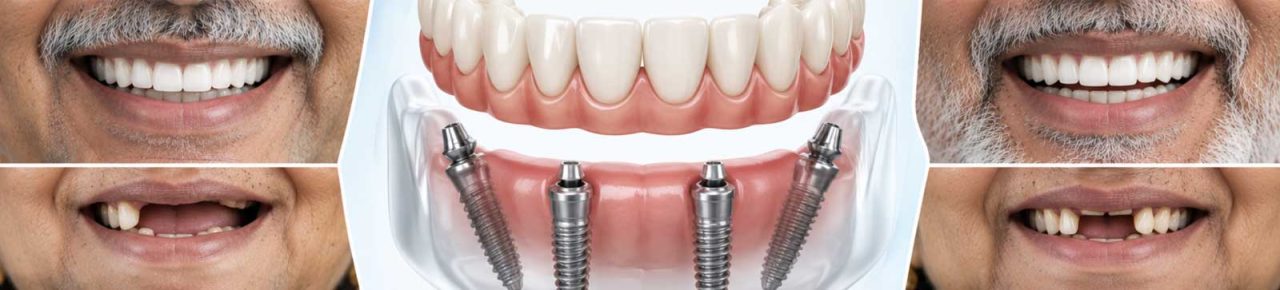
For patients who have lost many or all of their teeth, full-mouth or full-arch implant rehabilitation may provide a fixed alternative to conventional removable dentures when clinically appropriate.
Myth 7: Dental Implants Are the Same as Dentures
Fact: Dental implants and dentures are different treatment options.
Traditional dentures are removable prosthetic teeth that rest on the gums and surrounding oral structures.
Dental implants are placed into the jawbone and can provide support for fixed or removable prosthetic restorations, depending on the treatment plan.
The right option depends on your oral health, bone condition, expectations, budget and clinical requirements.
Myth 8: Dental Implants Take Years to Complete
Fact: Implant treatment does involve a healing period, but the overall timeline varies considerably between patients.
Some straightforward cases can progress relatively quickly, while complex cases may require additional procedures or longer healing periods.
In selected cases, immediate loading or same-day provisional teeth may be possible. However, this is not suitable for everyone.
At Maeoris Dental, digital planning and advanced in-house prosthetic capabilities can help streamline appropriate implant workflows while maintaining clinical considerations.
Myth 9: Dental Implants Do Not Need Any Maintenance
Fact: Dental implants still require regular care.
Although the implant itself is not a natural tooth and cannot develop a cavity, the surrounding gums and bone can still be affected by bacterial plaque and inflammation.
Poor maintenance can contribute to conditions such as peri-implant mucositis and peri-implantitis, which can compromise the tissues supporting an implant.
To maintain your implants:
- Brush twice a day
- Clean between your teeth and around the implant
- Follow your dentist’s recommended oral hygiene routine
- Attend regular dental check-ups
- Have professional cleaning when recommended
- Avoid smoking or tobacco use
Think of an implant as a long-term investment in your oral health—not a treatment that can simply be forgotten after placement.
Myth 10: Dental Implants Last Forever Without Any Problems
Fact: Dental implants can provide long-term tooth replacement, but their longevity depends on several factors.
Implant success and long-term maintenance can be influenced by:
- Oral hygiene
- Gum health
- Bone quality and quantity
- Implant positioning
- Prosthetic design
- Smoking
- Teeth grinding or excessive biting forces
- Regular professional maintenance
The implant and the prosthetic tooth should both be monitored over time.
With appropriate planning, maintenance and follow-up, dental implants can be a durable tooth-replacement solution for many patients.
Myth 11: Dental Implants Are Not Safe
Fact: Dental implants are an established treatment option in modern dentistry and have been used for decades.
Like any surgical or dental procedure, implant treatment carries potential risks and is not appropriate for every patient.
A thorough evaluation helps identify factors that could affect treatment, such as uncontrolled gum disease, insufficient bone, certain medical conditions, smoking habits or inadequate oral hygiene.
Your dentist should explain the potential benefits, limitations and risks before treatment begins.
Myth 12: All Dental Implant Treatments Are the Same
Fact: Implant treatment can vary significantly from one patient to another.
The number and position of implants, type of implant system, bone condition, surgical approach and final restoration all influence the treatment plan.
Advanced digital workflows can provide additional information for planning complex cases.
At Maeoris Dental Clinic, our implant dentistry journey has evolved from conventional implant treatment to a digitally integrated workflow incorporating CBCT imaging, intraoral scanning, CAD-CAM prosthetics, dynamic surgical navigation and implant photogrammetry.
The integration of technologies such as X-Guide navigation and Shining 3D photogrammetry can support greater precision in appropriately selected full-arch implant cases.
How Digital Implant Dentistry Can Improve Treatment Planning
Modern implant dentistry is increasingly driven by digital planning.
Technologies such as:
- 3D CBCT imaging
- Intraoral scanners
- Digital smile and facial scanning
- CAD-CAM prosthetic design
- Surgical navigation
- Implant photogrammetry
can provide clinicians with detailed information for diagnosis, surgical planning and prosthetic fabrication.
At Maeoris Dental, our digital implant workflow has evolved over the years to bring surgical and prosthetic planning closer together. The integration of X-Guide Next navigation with photogrammetry represents a further step towards connecting implant placement with highly precise prosthetic planning.
This technology is particularly valuable in complex implant cases where accurate implant positioning and prosthetic fit are important considerations.
Are Dental Implants Right for You?
Dental implants can be an excellent option for many people with missing teeth, but they are not automatically the right solution for everyone.
A proper implant assessment typically considers:
- Number and location of missing teeth
- Jawbone quantity and quality
- Gum health
- Existing teeth
- Bite and occlusion
- Oral hygiene
- Medical history
- Smoking and lifestyle factors
- Desired type of restoration
Your dentist can use clinical examination and appropriate imaging to determine which treatment options are suitable for you.
Choose Expertise and Precision for Your Implant Treatment
Choosing dental implants is more than choosing an implant fixture. Successful treatment involves diagnosis, surgical planning, implant placement, healing, prosthetic design and long-term maintenance.
At Maeoris Dental Clinic, our approach combines extensive implant experience with advanced digital technology to plan and deliver personalised implant solutions.
From single-tooth replacement to complex full-arch rehabilitation, treatment is planned according to the patient’s individual clinical requirements.
If you are looking for dental implants in Madurai or advanced implant treatment at a best dental clinic in Madurai or Dindigul, a professional consultation can help you understand your options and whether dental implants are suitable for you. Book your appointment today.
Frequently Asked Questions About Dental Implant Myths
Are dental implants painful?
The implant placement procedure is performed under appropriate anaesthesia. Mild discomfort, swelling or soreness may occur during the healing period.
How long do dental implants last?
Dental implants are designed for long-term use, but their longevity varies between individuals and depends on factors such as oral hygiene, gum health, implant care and biting forces.
Can dental implants be placed if I have bone loss?
Possibly. The treatment depends on the extent and location of bone loss. Bone augmentation or specialised implant techniques may be considered in selected cases.
Can anyone get dental implants?
Not everyone is an immediate candidate. A dentist needs to evaluate your bone, gums, oral health, bite and overall suitability before recommending implant treatment.
Are dental implants better than dentures?
There are different treatment options. For some patients, implants can provide greater stability, while dentures may be more appropriate in other situations. The best choice depends on individual clinical and personal factors.