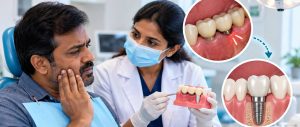


A healthy, well-aligned smile is not limited to childhood or the teenage years. Whether you are a parent noticing that your child’s teeth are coming in crooked, a teenager concerned about braces, or an adult who has lived with misaligned teeth for years, orthodontic treatment or teeth alignment at every age may be possible.
Modern dentistry offers several teeth alignment options, from traditional braces and clear aligners to specialised treatments for complex bite problems. The right treatment depends on your age, dental development, the severity of misalignment and your overall oral health.
At Maeoris Dental Clinic, the best dental clinic in Madurai and Dindigul, we evaluate each patient’s individual needs before recommending an orthodontic treatment plan or teeth alignment at every age. Here is a closer look at teeth alignment options available at every age.
Why Is Teeth Alignment at Every Age Important?
Crooked or misaligned teeth are not always just a cosmetic concern. Depending on the severity of the problem, poor alignment can affect how you bite, chew and clean your teeth.
Misaligned teeth may contribute to:
- Difficulty brushing and flossing certain areas
- A higher risk of plaque accumulation
- Cavities and gum problems
- Uneven wear of teeth
- Difficulty chewing food properly
- Jaw strain in some cases
- Speech difficulties associated with certain bite problems
- Reduced confidence about one’s smile
Early assessment and appropriate treatment can help address these concerns before they become more complicated.
Teeth Alignment for Children
Children do not need to wait until all their permanent teeth have erupted to have their orthodontic development assessed.
During childhood, the jaws and facial bones are still developing. This can make it possible to identify certain developing problems early, such as:
- Severe crowding
- Crossbite
- Open bite
- Protruding front teeth
- Excessive spacing
- Jaw growth discrepancies
- Habits affecting dental development
Early Orthodontic Assessment
An orthodontic evaluation during childhood does not always mean immediate treatment. In many cases, the dentist may simply monitor how the teeth and jaws develop.
However, when an intervention is necessary, early treatment may help guide jaw growth, create space for erupting permanent teeth or correct certain bite problems at an appropriate stage of development.
Depending on the child’s needs, treatment options may include:
- Removable orthodontic appliances
- Space maintainers
- Palatal expansion appliances
- Habit-breaking appliances
- Limited braces for specific teeth
The goal is not necessarily to start comprehensive braces as early as possible. Instead, it is to identify problems at the right time and intervene when treatment can offer a meaningful benefit.
Teeth Alignment for Teenagers
The teenage years are one of the most common periods for comprehensive orthodontic treatment. By this stage, most or all permanent teeth may have erupted, making it easier to assess the complete alignment and bite.
Common concerns during this age include:
- Crowded teeth
- Gaps between teeth
- Overbite
- Underbite
- Crossbite
- Protruding teeth
- Rotated teeth
- Teeth that have erupted in an incorrect position
Treatment Options for Teenagers
1. Traditional Braces
Traditional braces remain an effective treatment option for many types of tooth and bite misalignment. They use brackets and wires to gradually move teeth into their planned positions.
Braces can be particularly suitable for patients with moderate to complex alignment problems.
2. Self-Ligating Brackets – An Advanced Version of Regular Braces
Self-ligating brackets are an advanced version of traditional braces. Unlike conventional braces, which use elastic bands or metal ties to hold the archwire in place, self-ligating brackets have a built-in mechanism or clip that secures the wire.
This design can reduce friction during tooth movement and may make certain stages of orthodontic treatment more efficient. Depending on the patient’s specific orthodontic needs, self-ligating braces may also allow for easier adjustments and improved comfort.
Like other orthodontic treatment options, self-ligating brackets are not automatically the best choice for every patient. The suitability of this treatment depends on the complexity of the alignment and bite problem and the overall treatment plan.
3. Clear Aligners
Clear aligners are removable, transparent trays designed to move teeth gradually.
They may be a suitable option for teenagers who are able to wear them consistently as instructed. Because aligners are removable, patient compliance plays an important role in achieving the desired results.
4. Ceramic Braces
Ceramic braces work similarly to conventional braces but are designed to be less visually noticeable. They can be an option for patients who want a more discreet fixed orthodontic treatment.
The most suitable option depends on the specific orthodontic problem rather than appearance alone.
Teeth Alignment for Adults
One of the most common misconceptions about orthodontic treatment is that braces are only for children and teenagers.
Adults can also undergo orthodontic treatment.
Teeth can be moved at different ages as long as the teeth and supporting tissues are healthy enough for treatment. Adult patients may seek teeth alignment for several reasons, including concerns that have existed since childhood or changes that have developed over time.
Why Do Teeth Become Crooked Again in Adulthood?
Even people who had braces earlier in life may experience changes in tooth position over time. This can happen due to several factors, including natural changes in the dentition, inadequate retainer use and other forces affecting the teeth.
Adult patients may also develop new concerns due to:
- Progressive crowding
- Missing teeth
- Gum disease affecting tooth support
- Tooth loss and shifting of neighbouring teeth
- Uneven tooth wear
- Changes in bite
Before starting orthodontic treatment, it is important to assess the overall health of the teeth and gums.
Treatment Options for Adults
Clear Aligners
Clear aligners are a popular option among adults because they are discreet and removable. They may be suitable for a range of mild to more complex cases, depending on the treatment plan.
Patients must wear aligners for the recommended number of hours each day for treatment to progress effectively.
Traditional Braces
Traditional braces remain an excellent option for adults, particularly when precise control of tooth movement is required.
Modern braces can treat a wide range of alignment and bite concerns.
Self-Ligating Brackets
Self-ligating brackets can also be an option for adult orthodontic patients. As an advanced version of regular braces, they use a built-in mechanism to hold the archwire rather than conventional elastic ties.
They may be suitable for selected cases where fixed orthodontic treatment is recommended. The right choice between conventional braces, self-ligating brackets and other treatment options should always be based on the patient’s individual alignment, bite and treatment requirements.
Ceramic Braces
For adults who prefer a less noticeable fixed appliance, ceramic braces may be considered when clinically appropriate.
What If You Have Crowns, Implants or Missing Teeth?
Adults with previous dental work can still be candidates for orthodontic treatment, but the treatment plan requires careful coordination.
For example, orthodontics may sometimes be used before replacing a missing tooth with a dental implant. Moving the surrounding teeth into suitable positions can help create the appropriate space for the final restoration.
Dental implants themselves do not move in the same way as natural teeth during orthodontic treatment. Therefore, cases involving implants require careful planning.
At Maeoris Dental, complex treatment planning can involve coordination between orthodontic, restorative and implant dentistry considerations to achieve a functional and aesthetically balanced result.
Is There an Upper Age Limit for Teeth Alignment?
There is no fixed upper age limit for orthodontic treatment.
The more important factors are:
- The health of your gums and supporting bone
- The condition of your teeth
- The type and severity of the alignment problem
- Existing restorations or implants
- Your bite and jaw relationship
- Your commitment to treatment and aftercare
A 50-year-old or older adult may still be suitable for orthodontic treatment if the clinical assessment indicates that treatment is appropriate. If they have any other medical conditions, then specific medical certificates would be necessary from their doctors to proceed with the treatment.
How Long Does Teeth Alignment Treatment Take?
The duration varies significantly from person to person.
Simple alignment concerns may take less time than complex cases involving significant crowding, bite correction or multiple dental problems. Treatment time can also depend on how consistently patients follow instructions, particularly with removable aligners and retainers.
Your dentist or orthodontist can provide a more realistic estimate after examining your teeth and planning the required tooth movements.
Why Retainers Are Important After Treatment
Finishing braces or clear aligner treatment is not the end of orthodontic care.
After teeth have been moved into their new positions, retainers help maintain the result. Without appropriate retention, teeth can gradually shift again over time.
Depending on your treatment needs, you may be advised to use:
- Removable retainers
- Fixed retainers
- A combination of both
Following retainer instructions is essential for protecting the time and effort invested in your new smile.
How Does Digital Dentistry Support Orthodontic Planning?
Modern digital technologies have transformed the way dental treatment can be planned and visualised.
Digital scanning can provide detailed impressions of the teeth without conventional impression materials. These digital records can support diagnosis, treatment planning and monitoring of tooth movement.
At Maeoris Dental, our long-standing investment in digital dentistry supports a precision-focused approach to comprehensive dental care. Digital workflows can be particularly valuable when orthodontic treatment needs to be coordinated with restorative, implant or other complex dental procedures.
Which Teeth Alignment Treatment Is Right for You?
There is no single treatment that is best for everyone.
A teenager with severe crowding may require a different approach from an adult seeking to correct mild front-tooth misalignment. Similarly, a patient with a significant bite discrepancy requires more than simply straightening visible teeth.
A proper orthodontic assessment should consider:
- Tooth position
- Bite relationship
- Jaw development
- Gum and bone health
- Facial aesthetics
- Existing dental work
- Long-term stability
The best treatment is the one that addresses your specific clinical needs while supporting long-term oral health and function.
Looking for Teeth Alignment Treatment in Madurai or Dindigul?
Whether you are considering early orthodontic evaluation for your child, braces for your teenager or teeth alignment as an adult, it is never a matter of simply choosing between braces and aligners.
The first step is understanding your teeth, bite and overall oral health.
At Maeoris Dental, we provide personalised dental assessments and modern treatment planning for patients of different age groups. Our approach combines clinical expertise with advanced digital dentistry to help plan treatment based on each patient’s individual needs.
If you are looking for the best dental clinic in Madurai or the best dental clinic in Dindigul for teeth alignment, braces, clear aligners or comprehensive dental care, schedule a consultation with the Maeoris Dental team to understand the treatment options suitable for you.
Frequently Asked Questions
At what age should a child first see a dentist for orthodontic assessment?
An orthodontic assessment can be helpful during childhood to identify developing alignment or bite problems. The appropriate timing depends on the child’s dental development and individual concerns.
Can adults straighten their teeth?
Yes. Adults can undergo orthodontic treatment if their teeth and supporting tissues are suitable for treatment. Options may include clear aligners, traditional braces or ceramic braces.
Are clear aligners better than braces?
Neither option is automatically better for every patient. The right choice depends on the type and complexity of the orthodontic problem, treatment goals and patient compliance.
Is teeth alignment treatment painful?
Patients may experience temporary pressure or discomfort when braces are adjusted or when moving to a new set of aligners. This generally reflects the forces used to move teeth and is usually manageable.
Will my teeth become crooked again after treatment?
Teeth can shift over time. Wearing retainers as advised is important for maintaining the results of orthodontic treatment.
How do I know which teeth alignment treatment I need?
A clinical examination is necessary to assess your teeth, bite, gums and overall oral health. Your dentist or orthodontist can then recommend the most suitable treatment approach.