

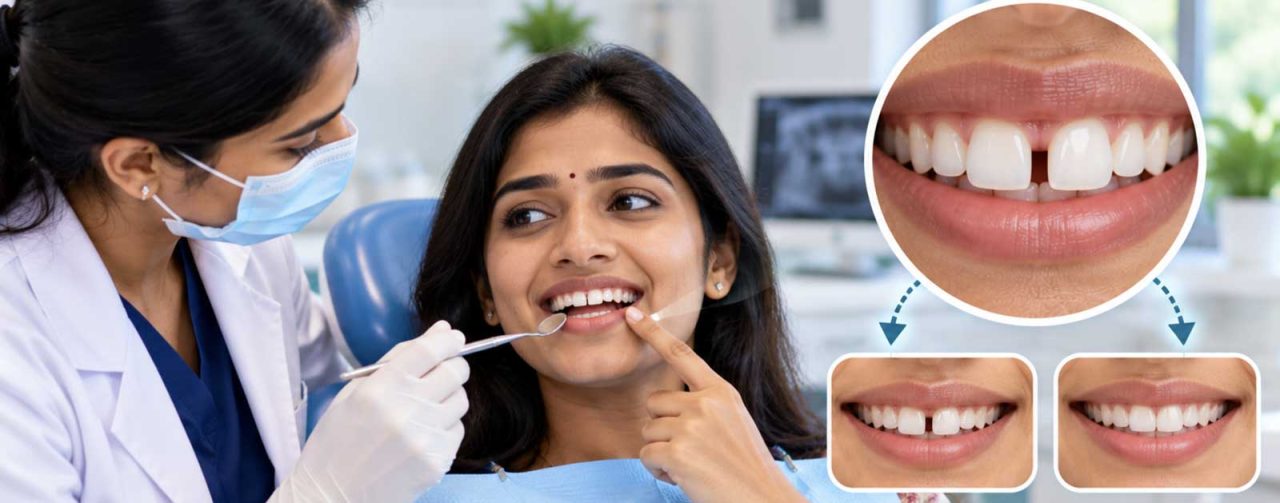
A small gap between two teeth may seem like a purely cosmetic concern. For some people, tooth spacing is simply a natural feature of their smile. For others, however, gaps between teeth can be linked to bite problems, gum health, missing teeth or changes in the position of the teeth over time.
So, is spacing between teeth just a cosmetic issue, or can it indicate an underlying dental problem?
The answer depends on why the gap has developed, where it is located and whether it is changing over time.
At Maeoris Dental Clinic, we assess tooth spacing not just from an aesthetic perspective but also in relation to your bite, gums, tooth position and overall oral health. As a leading dental clinic in Madurai, our approach focuses on understanding the cause before recommending treatment.
What Causes Gaps Between Teeth?
Spacing between teeth, also called diastema, can occur for several reasons. Some gaps are completely natural, while others may develop due to changes in the teeth or supporting tissues.
1. Natural Tooth Development
Some people naturally have spaces between their teeth because of the size and shape of their teeth and jaws. A gap between the upper front teeth is particularly common.
If the spacing has always been present and there are no associated dental problems, treatment may not be medically necessary.
2. Small or Missing Teeth
When teeth are smaller than the available space in the jaw, gaps can develop. Similarly, a missing tooth can leave space that allows neighbouring teeth to shift.
In such cases, closing the gap may involve orthodontic treatment, restorative dentistry or dental implants, depending on the individual situation.
3. Gum Disease
One of the more important reasons to pay attention to new or increasing spaces between teeth is gum disease.
Advanced gum disease can affect the tissues and bone supporting the teeth. As support decreases, teeth may become mobile or gradually change position, creating new gaps.
If spacing develops suddenly in adulthood, a dental examination is important.
4. Tongue-Thrusting Habits
The position and movement of the tongue can influence tooth position over time. Persistent tongue-thrusting habits, particularly during swallowing, may contribute to spacing or changes in the bite.
Children may benefit from early evaluation if an oral habit appears to be affecting tooth alignment.
5. Large or Low Frenum
The labial frenum is the small fold of tissue connecting the inside of the upper lip to the gum. In some individuals, a prominent or unusually positioned frenum can contribute to a gap between the upper front teeth.
Your orthodontist can determine whether the frenum is actually contributing to the spacing.
6. Teeth Moving with Age
Teeth are not permanently fixed in one position. They can move gradually throughout life.
Changes in bite, tooth loss, gum health and failure to wear retainers after orthodontic treatment can all contribute to teeth shifting and new spaces appearing.
When Is a Gap Between Teeth a Dental Problem?
Not every gap requires treatment. However, spacing deserves professional evaluation when it is:
- New or increasing over time
- Associated with bleeding or swollen gums
- Accompanied by loose or mobile teeth
- Making it difficult to bite or chew properly
- Associated with food frequently getting trapped
- Affecting speech
- Accompanied by changes in your bite
- Developing after tooth loss
- Appearing after previous orthodontic treatment
A new gap in adulthood should not automatically be assumed to be a cosmetic concern. It may be a sign that the position or supporting structures of the teeth have changed.
Can Gaps Between Teeth Affect Oral Hygiene?
Yes. The effect depends on the size and location of the spaces.
Some spaces can actually make certain areas easier to clean. However, irregular spacing can also create areas where food accumulates, particularly around the gums.
If plaque remains around these areas, it can contribute to:
Plaque buildup → gum inflammation → gum disease → loss of supporting tissue and bone
This is why evaluating the health of the gums is an important part of assessing tooth spacing.
Is It Necessary to Close Every Gap?
No.
If a gap is naturally occurring, stable and not affecting oral health, bite or function, treatment may not be necessary.
Some people also choose to keep their natural spacing because it is part of their individual smile.
Treatment becomes more relevant when the spacing is causing functional problems, affecting oral health or when the patient wants to change the appearance of their smile.
The right approach should therefore be based on the cause of the spacing, dental health and the patient’s treatment goals.
Can Teeth Develop Gaps Again After Treatment?
Yes. Teeth can shift after orthodontic treatment, which is why retainers are an important part of maintaining orthodontic results.
Even after successful treatment, teeth can naturally move over time. Following the recommended retention plan can help maintain the alignment achieved through orthodontic treatment.
How Does an Orthodontist Diagnose the Cause of Tooth Spacing?
A dental evaluation may include:
- Examination of the teeth and gums
- Assessment of your bite
- Evaluation of tooth movement and alignment
- Checking for missing or undersized teeth
- Assessment of gum and bone support
- Dental X-rays or other imaging when required
- Digital scans for detailed evaluation of tooth position
The goal is not simply to measure the gap. It is to understand why the gap exists.
When Should You See an Orthodontist?
If you have always had a small gap and it has remained unchanged, it may simply be a natural characteristic of your smile.
However, you should consider a dental examination if you notice that:
A gap is becoming larger → teeth are moving → gums are bleeding → teeth feel loose → your bite is changing
These changes should not be ignored.
Early evaluation can help identify gum disease, tooth movement, missing teeth or bite-related concerns before they become more complicated.
Get Your Smile and Oral Health Evaluated at Maeoris Dental
Spacing between teeth is not always a problem and not every gap needs to be closed. But when spacing changes or is accompanied by other dental symptoms, it is important to identify the underlying cause.
At Maeoris Dental, treatment planning combines clinical examination with advanced digital dentistry to evaluate tooth alignment, bite, gum health and overall dental function before recommending treatment.
If you are looking for the best dental clinic in Madurai or the best dental clinic in Dindigul for orthodontic, restorative or implant-related concerns, a professional evaluation can help you understand whether your tooth spacing is simply cosmetic or requires dental treatment.
A gap may be small, but understanding why it is there can make a big difference to your long-term oral health.